
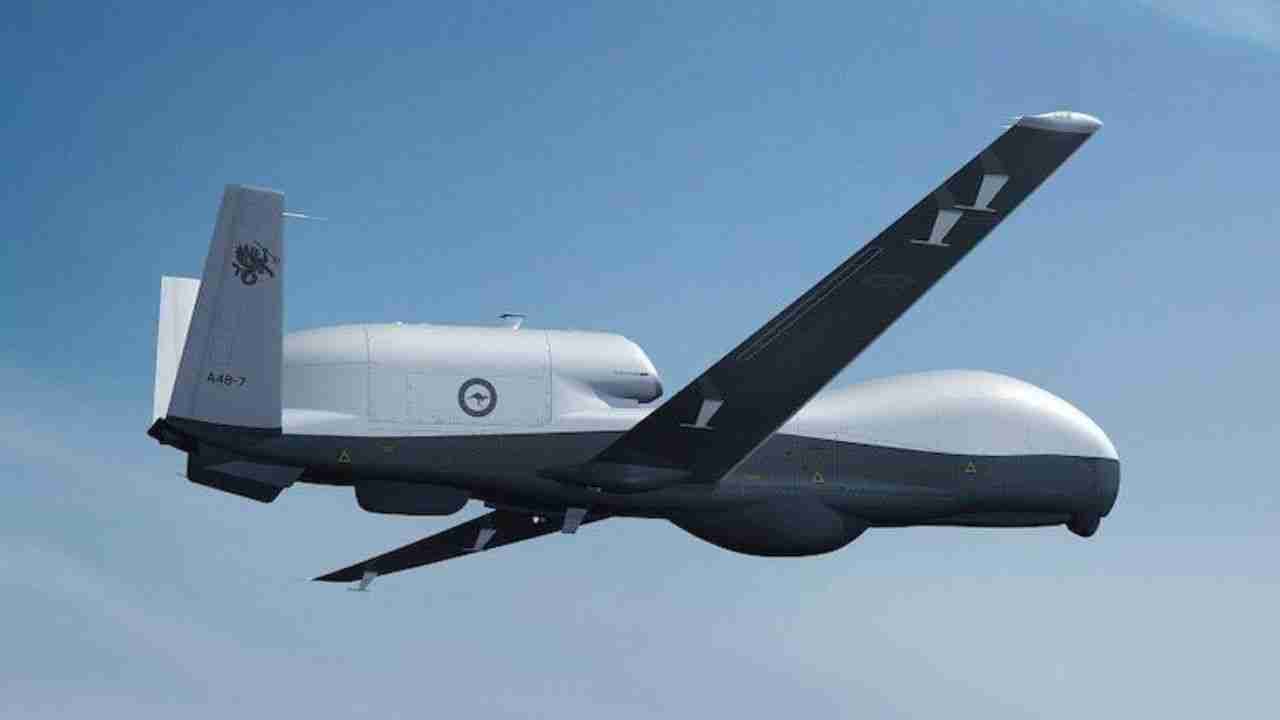
The drone Global Hawk has once again carried out one of NATO’s most extensive surveillance missions, monitoring the Russian border from Europe.
The latest flight of FORTE10 took off from the Sigonella base in Sicily, crossed the Tyrrhenian Sea, flew over France and Germany, and then entered Polish airspace, ending its route near the meeting point between Poland, Lithuania, and the Russian exclave of Kaliningrad, one of the alliance’s most sensitive areas.
Capable of operating at around 18,000 meters altitude for over 30 hours, the drone offers wide range and security by avoiding weather or air traffic interference. The platform carries advanced sensors, such as synthetic aperture radar, electro-optical and infrared cameras, as well as signals intelligence equipment, allowing real-time collection of images, thermal signatures, and electronic emissions.
These missions reinforce the ongoing monitoring by the U.S. and NATO of Russian military movements, ensuring long-range situational awareness without exposing crews to risks. With enough range to cover half of the continent and return without refueling, the Global Hawk remains one of the alliance’s key strategic surveillance assets.
Source: UK Defence Journal | Photo: X @defense_civil25 | This content was created with the help of AI and reviewed by the editorial team
FORTE10, a U.S. Air Force RQ-4B “Global Hawk” High-Altitude Surveillance Drone with the 7th Reconnaissance Squadron at Naval Air Station Sigonella, is on its regularly scheduled bi-weekly or so mission over Eastern Europe, near Ukraine and the Russian exclave of Kaliningrad.… pic.twitter.com/nsCAL5yNTW
— OSINTdefender (@sentdefender) November 22, 2025
